
Befriending Fear

I have been thinking a lot about fear lately. About the kind of fear that can be a friend, not something — well, to be afraid of.
FDR famously told a country in the middle of the Depression that we have nothing to fear but fear itself, and we’ve quoted it ever since like a pep talk. But I have started to think there is something much deeper about fear, something that is quietly guiding me these days. FDR wasn’t telling us to be unafraid. He was telling us that the real enemy isn’t fear — it’s what fear does to us when we refuse to look at it.
So I have been looking a bit (yikes).
Nuns, poets and philosophers have been grappling with and teasing apart this idea for the ages. Pema Chödrön, the Buddhist nun who gets to the heart of things more than most therapists I know, says:
“Fear is a natural reaction to moving closer to the truth.”
The trembling in your chest, in your hands, is not a stop sign. It’s about getting warmer.
David Whyte, the Anglo-Irish poet I have been reading for the last few years, calls anxiety the mask that truth wears when we refuse to stop and look at its face. Fear and its cousin anxiety, in his interpretation, are not noise to be silenced. They are messengers — the long-distance kind, dusty and a little out of breath, who have come a great way to find us.
I say ‘a great way’ as I am in my early 60s. I would say six decades is a hike before you find what you are looking for, wouldn’t you?
Last week I had the fortune to ponder all of this under the shockingly blue skies of Connemara — the locals reminded me at every turn that the sky is not normally that color — as Dan and I walked the Famine Trail and other trails along the Wild Atlantic Way. We passed almost nothing for miles and miles but sheep, their gorgeous baby lambs, stone walls, peat, and the occasional ruined famine cottage.
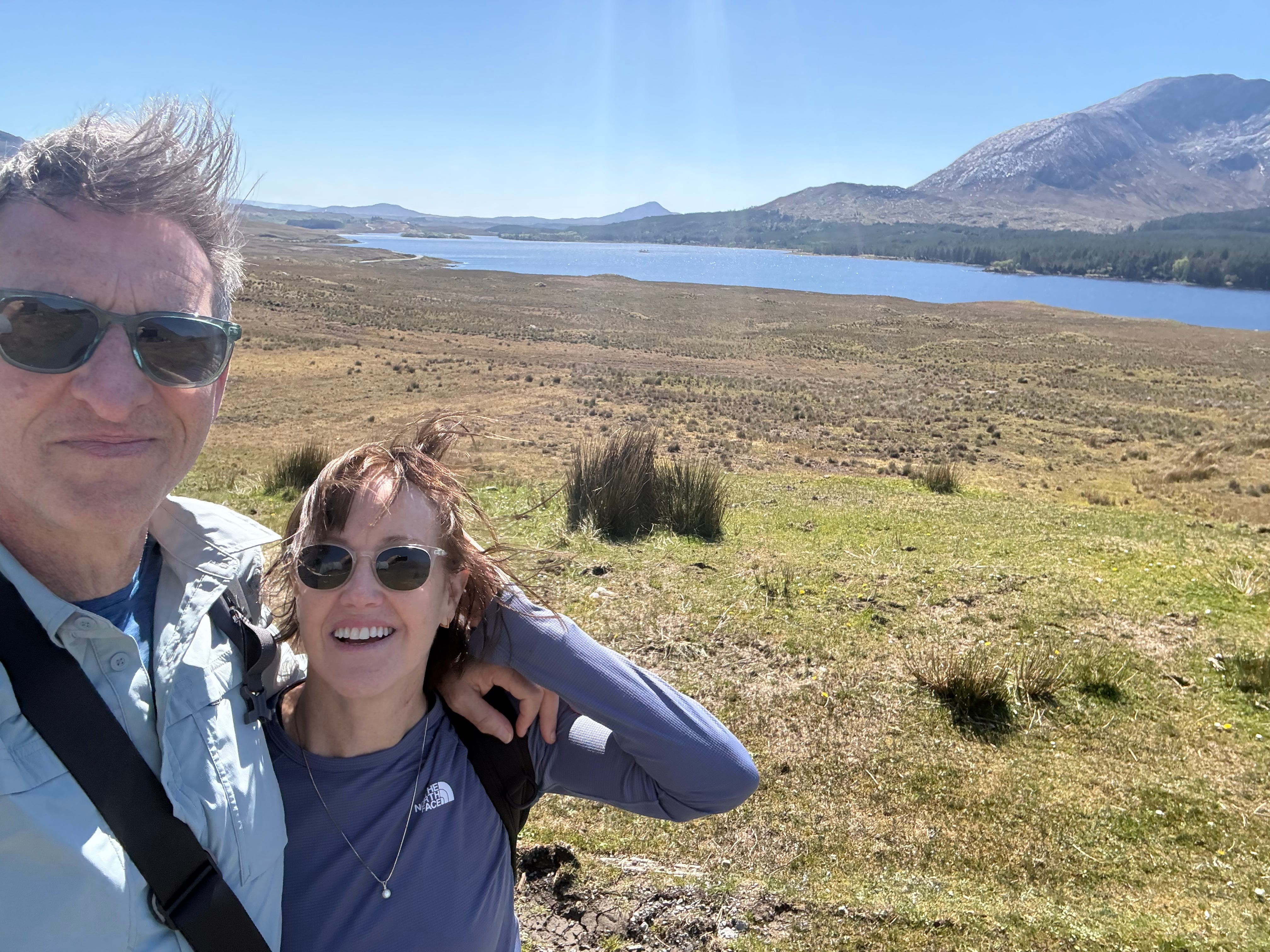
It’s the kind of walking where you have only your own thinking and the wind, both in a delicious pairing. It turned out to be exactly the gift I needed. A long, slow stretch of time in which to ponder, with no one watching, what it would mean to be a painter in the next chapter of my life — and what, exactly, was scaring me about it.
What, exactly, is so scary about calling myself an artist? When someone asked to buy one of my paintings, I literally went mute. Why? I have never been without words in my life. (And I mean, never.) If I thought that the painting wasn’t up to a version of worthiness to me, why was I transferring that to the viewer? Maybe they were seeing something else entirely.
So what, if I don’t think it passes muster, but someone else sees something they like, I thought, somewhere around mile seven, with the wind doing forty and the sheep looking unimpressed.
So what, indeed.
Because — and you’d think this would have occurred to me sooner — I am a deeply creative person, by all rights an artist in many aspects of my life: cooking, gardening, sewing, knitting, and literally how I can make something out of nothing — gifts, cards, whatever. It is a bit of a joke in my family that with no time to spare and very few ingredients, comes something great.
I have also worked with creative teams my entire professional life. For thirty years I have art-directed brand campaigns, generated names and identities, designed more logos than I can count, and, more importantly, creatively steered conversations about how organizations might do real good in the world. I wasn’t afraid of any of that. Running workshops with the C-suite? Not afraid. Writing speeches, pitching top-tier outlets, outlining media tours, dreaming up guerrilla marketing adventures, sketching out packaging? Not afraid. I have always been — dare I say it — quite good at my work. Still am.
But the painting? Ummmm.
Why are we so afraid to declare what we actually want? Why does the imposter voice take up the most square footage in our heads when the thing matters most? I have the beginnings of a theory.
The things we have made our living at are also the things we have made some peace with failing at; we’ve already failed publicly enough times to know we’ll survive it. But the thing we have not yet stepped into, the thing we have been carrying in private — the painting, the novel, the second act, the long-deferred what if I just — that one is unprotected. There is no track record. There is just the bare, tender wanting. And the bare, tender wanting is exactly what fear smells.
I’m not pretending I’m there and all good, believe me. The long walk in Ireland helped, but this is more than just a week wandering with sheep and cows.
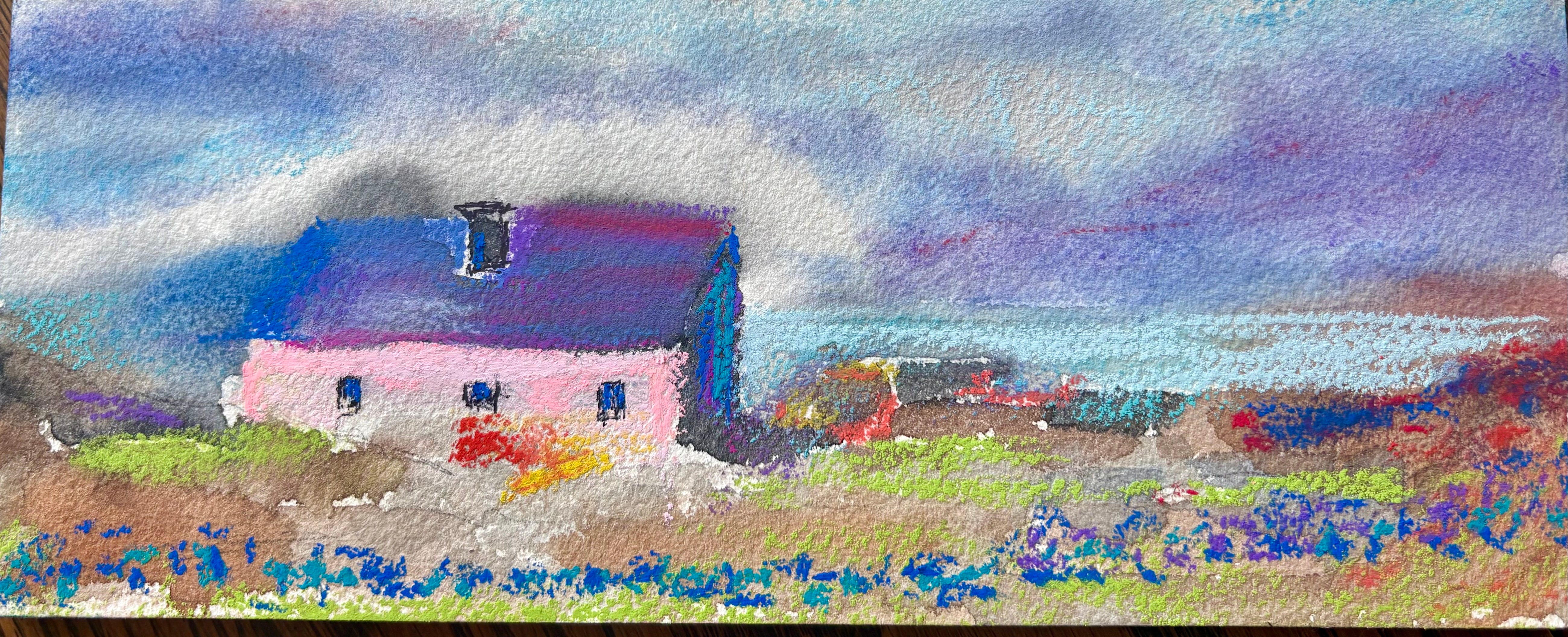
I have been having a few conversations with myself to admit what I have been afraid of, when it comes to the artist title. More precisely — whom I had been afraid of.
My mother. The original Mary.
She went to art school in Chicago in the 1940s, in heels and cigarettes. She did stained glass commissions for cathedrals. She painted, sculpted, carved woodcuts. Then she married my father, had ten children, and spent the next thirty years teaching art in public school — handing her own practice to other people for the rest of her life, and being magnificent at it. She was the one who got me to love art, but nothing felt more impractical than that title going to college in the 1980s.
My mother was the artist, not me. She was also, by a wide margin, my harshest critic.
She came from a generation that did not hand out trophies for showing up. You earned your badges — and, ridiculously, I earned every single Girl Scout badge there was, which tells you something about both of us. Praise was not free in our house; it was a currency you worked for, and when it arrived it meant something. I learned early that I could do anything. I also learned that anything I did had better be good.
She has been gone a long time now. And here is the strange thing I did not expect: in the years since she died, the critic has slowly quieted. What is left is the other mother. The one who told me I could do anything, and meant it. The one I looked up to. The one who, I am increasingly certain, would have been delighted — and a little smug — about all of this.
The fear that someone would ask to buy a painting was never really about the buyer. It was about her. About the small, formative voice that wondered whether I had the right. About being measured against the artist I never quite believed I could be, by the person who taught me what an artist was.
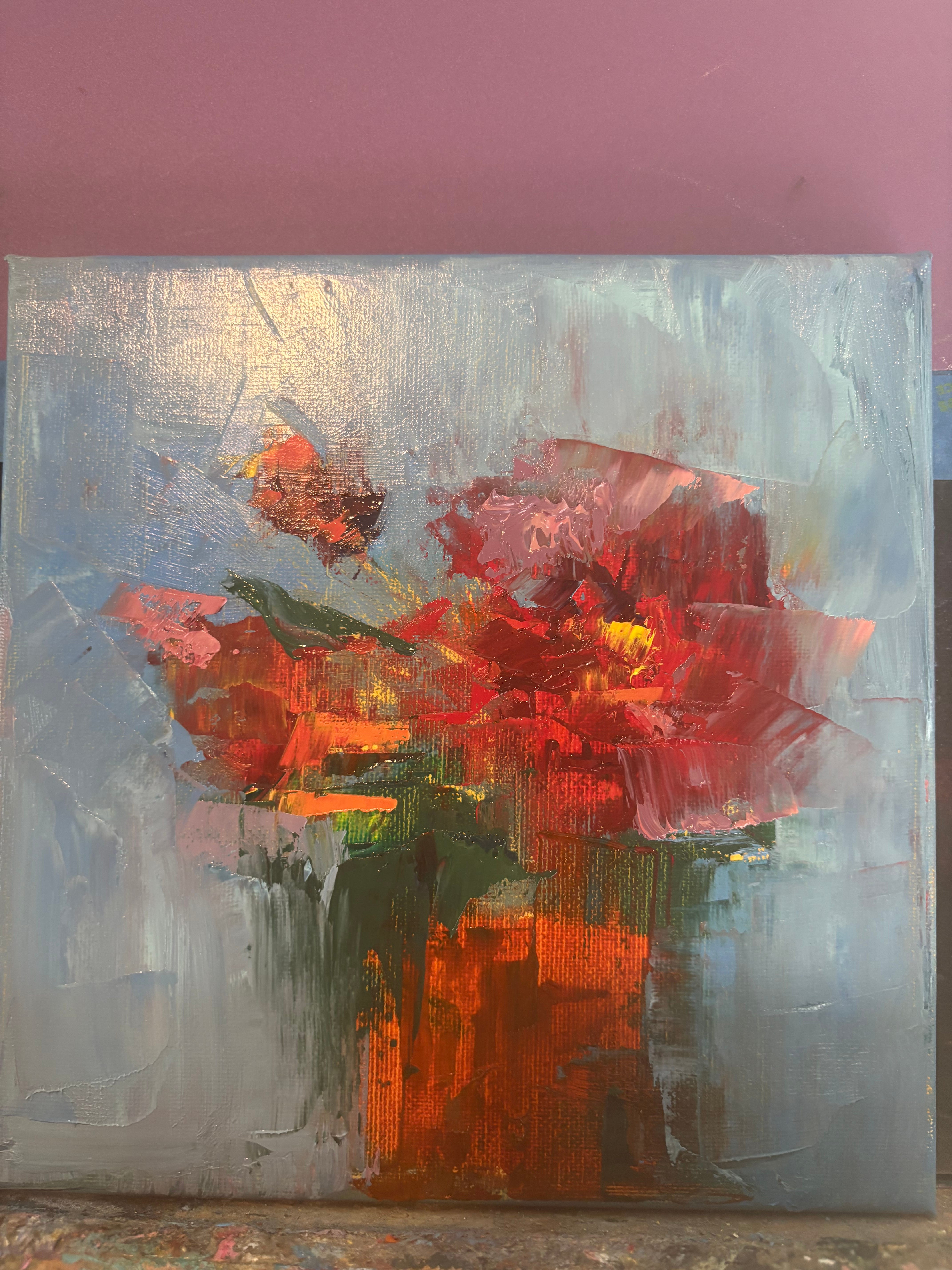
Listening to the fear, instead of running from it, is what finally let me see the rest. The fear is not protecting me from failure. It is pointing, very gently, at the thing I am dying to explore.
My mother is still very present. She is in the palette knife and the smell of oil paint and the way I can’t quite let a painting go until it has earned its keep. The critic in her has gone quiet. What I hear now, when I am paying attention, is the other voice — the one who handed me the knife in the first place, and is, I believe, urging me along.
I am, finally, listening.
— MJ
This quote: “Fear is a natural reaction to moving closer to the truth.” Was exactly what I needed to hear today. And your story is so beautiful - it got me thinking fears come from and how to shift our understanding and thinking. Thanks for your wise words.
Hey — I came across your writing and really liked how you think.
I’m exploring something similar from a different angle — writing about human behavior through a system design lens (like debugging internal patterns).
Just started publishing on Substack. If you ever get a moment to read, I’d genuinely value your perspective.
Also happy to support your work — feels like there’s an interesting overlap here.